An Apple a Day
A little girl. A very caring mother. One apple too many. A narrative game about the distance between loving someone and understanding them.
- Role
- Direction · Game design · Story · Art
- Context
- Development project
- Scope
- 3-person collaboration · Unreal Engine 5
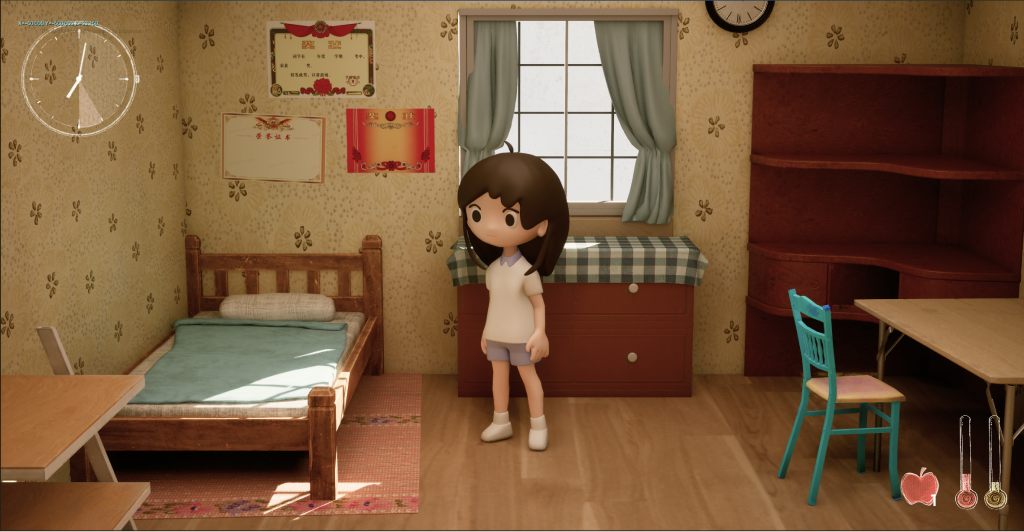
I lead the game's direction, story, visual design, environments, characters, animation, and UI, working with a programmer and a composer.
When care gets heavy.
Every morning, a mother packs an apple for her daughter, even after a breakfast that leaves her too full to eat another bite. The girl's first problem seems small: what can she do with the apple without hurting her mother's feelings?
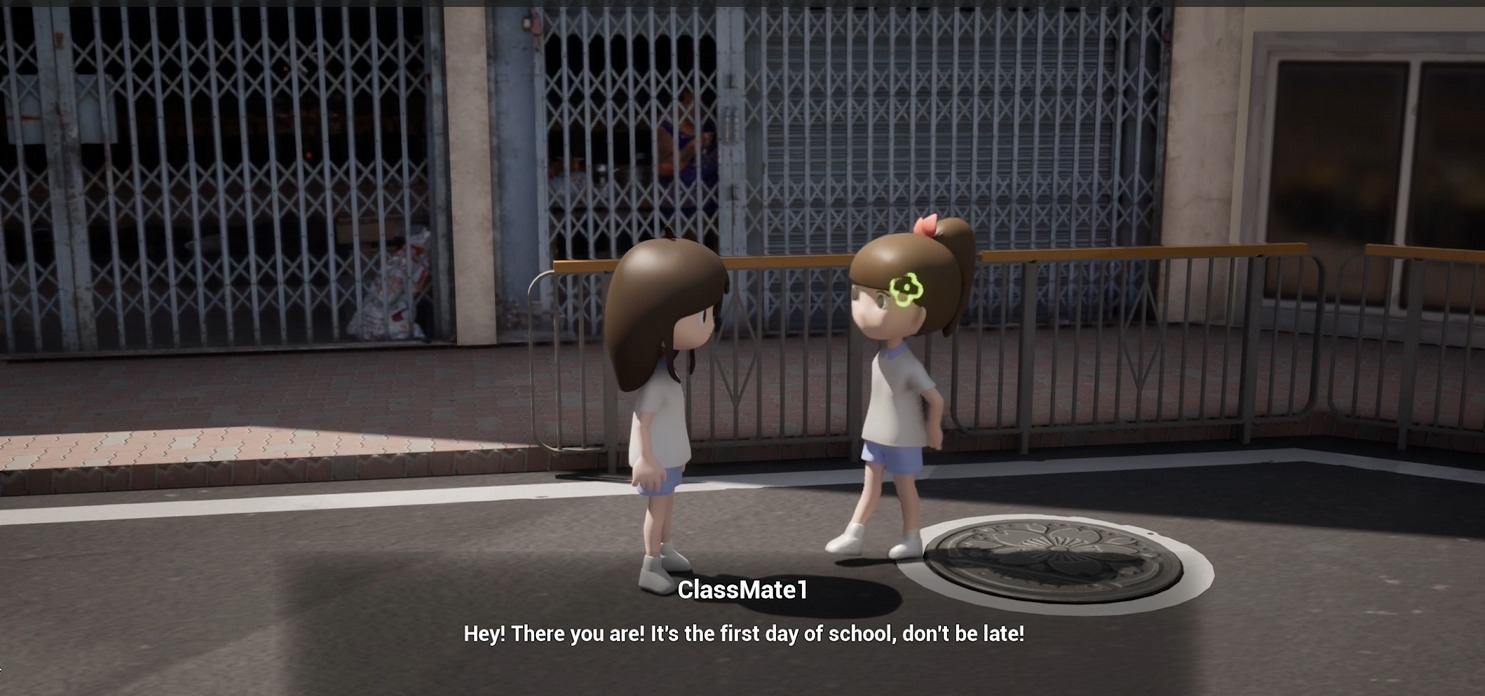
Set in a Chinese city around 2008, the game follows her walk to school. Neighbors, friends, and ordinary errands gradually reveal the tension beneath this daily ritual.
An errand becomes a relationship.
The apple begins as a daily objective. Later, the girl gathers the courage to say no. Refusing it opens a deeper question: how can she understand her mother, beyond the conflict they repeat each morning?
A small act of escape.
Explore the city, talk to people, and find ways to deal with the apple before school starts.
A reason to look closer.
Collect pieces of the mother's story through objects, conversations, and events. The apple becomes optional as the relationship takes center stage.
A family resemblance.
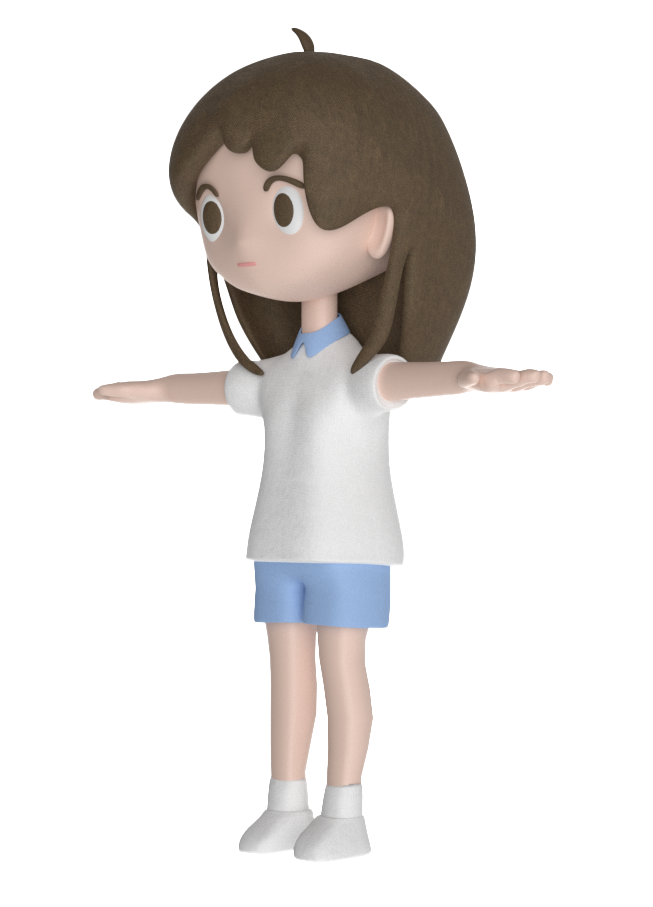
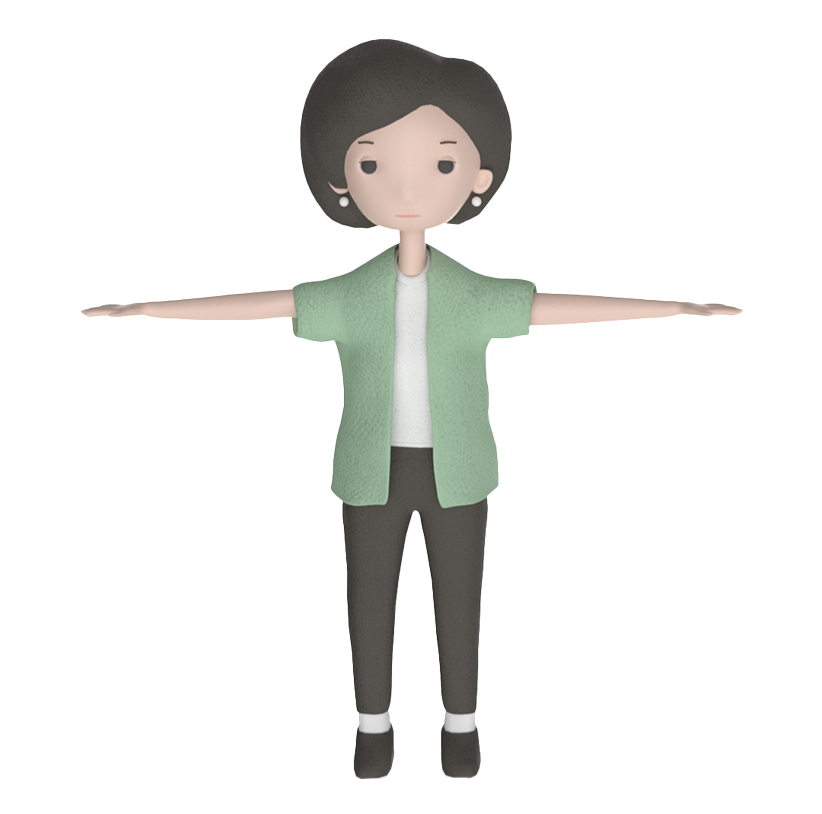
The mother's appearance draws on my own mother. The girl's uniform comes from primary schools in Shenzhen. Their apple-like hairstyles carry the story's central object into the character design.
The city feels bigger when you're small.
I paired childlike characters with realistic buildings and familiar domestic details. Shops, playgrounds, greenery, and changing streets suggest a city growing around the girl.
Her route connects home, neighborhood streets, the school approach, and classrooms. Shortcuts save time before the bell, leaving more room for conversations and side quests.
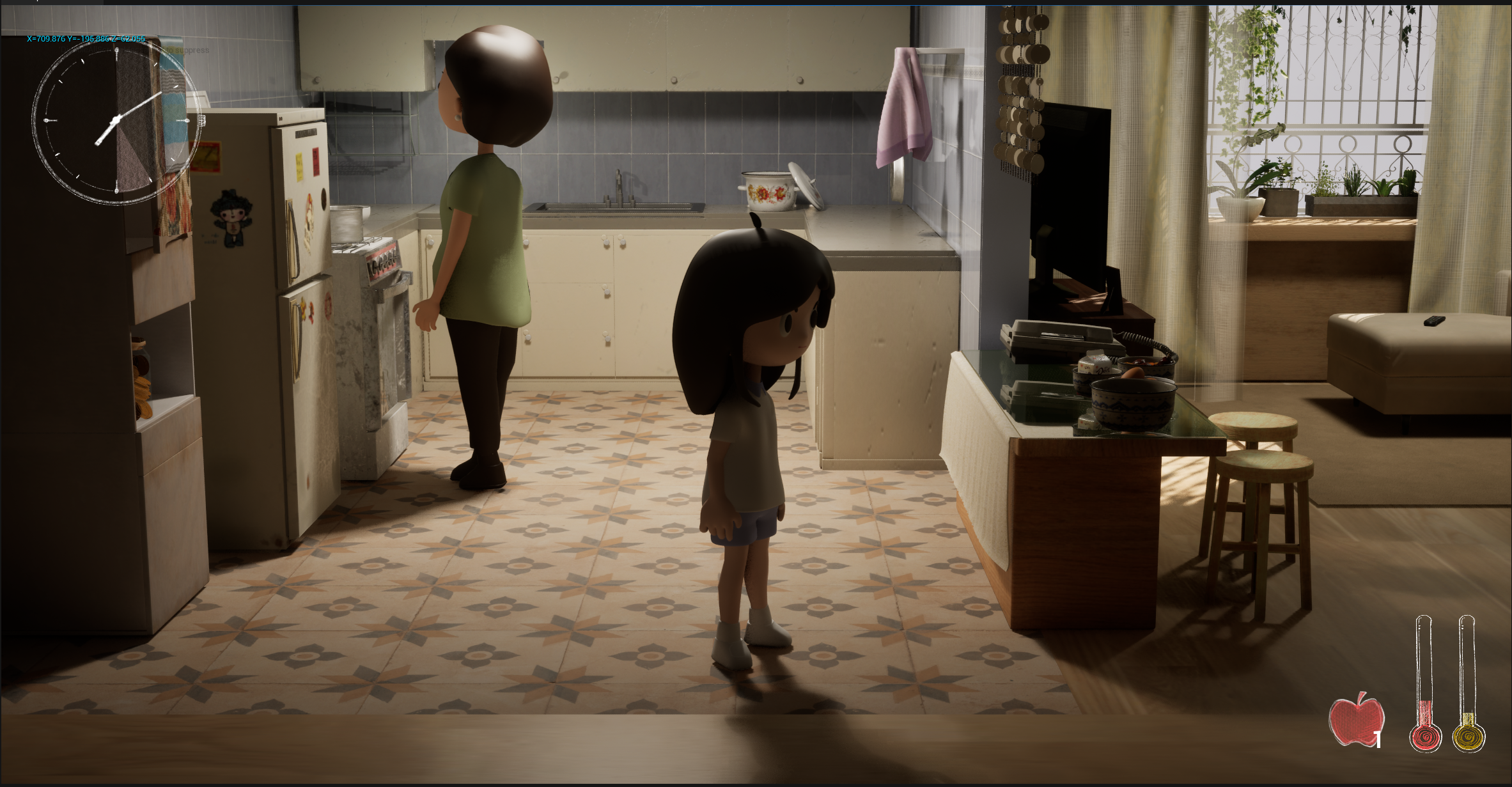
From layout to lived-in space

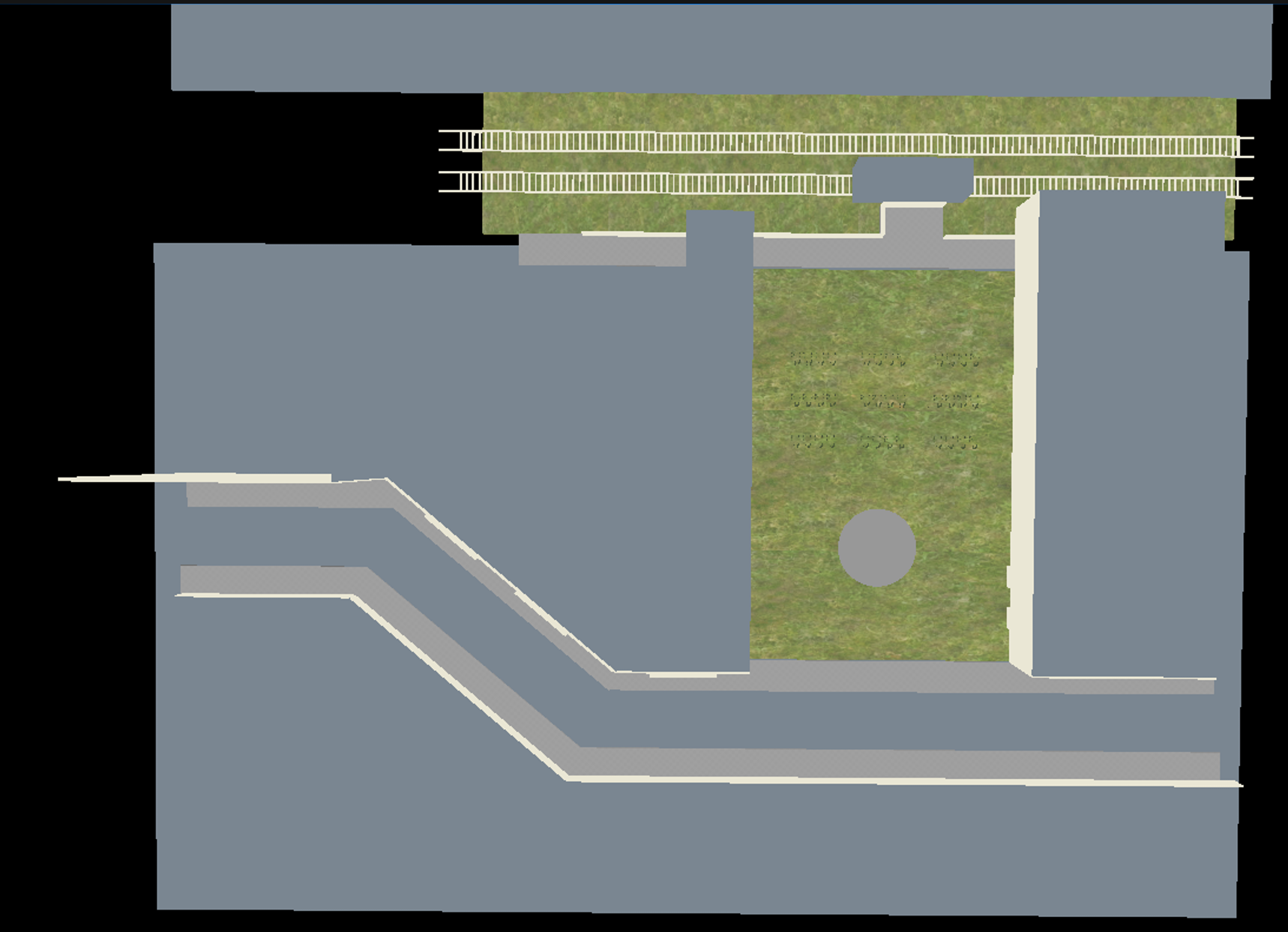
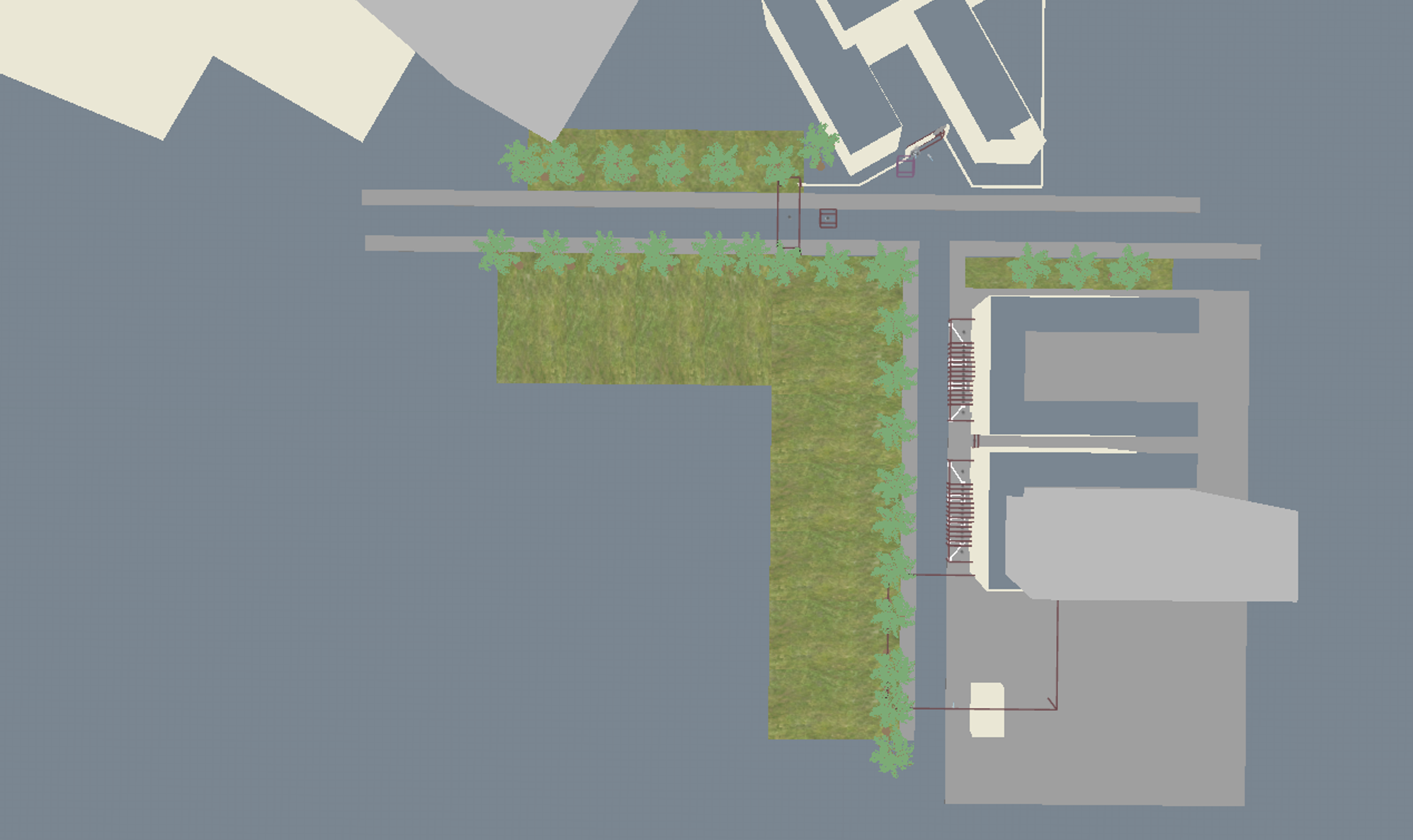

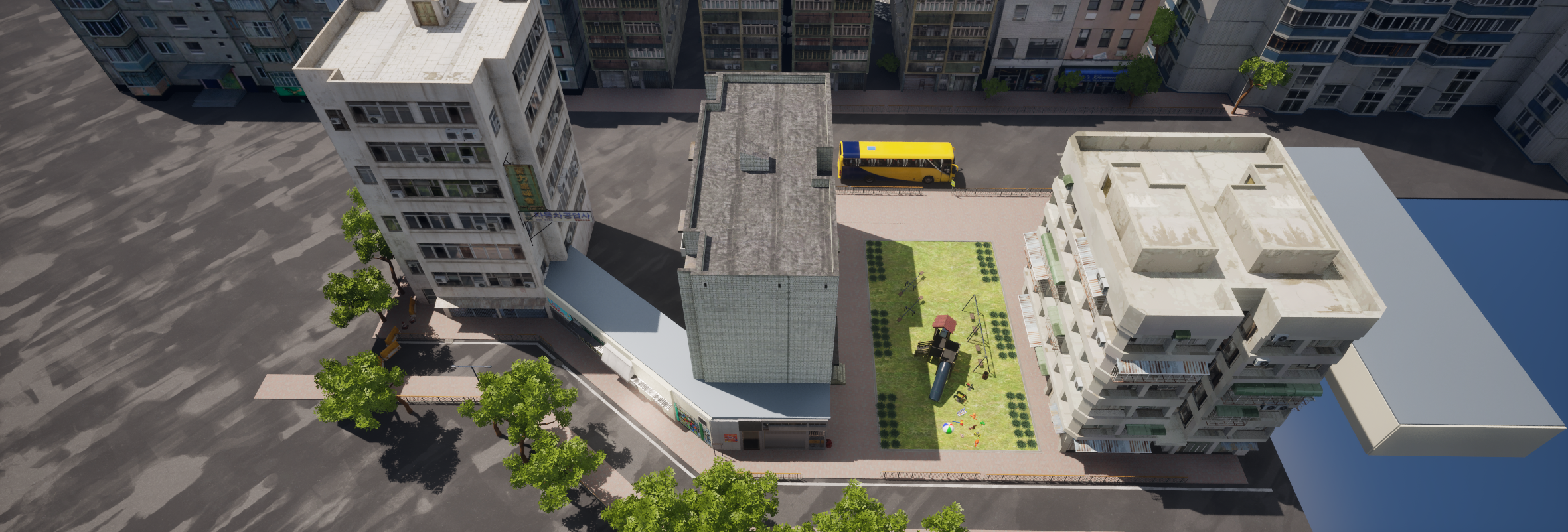
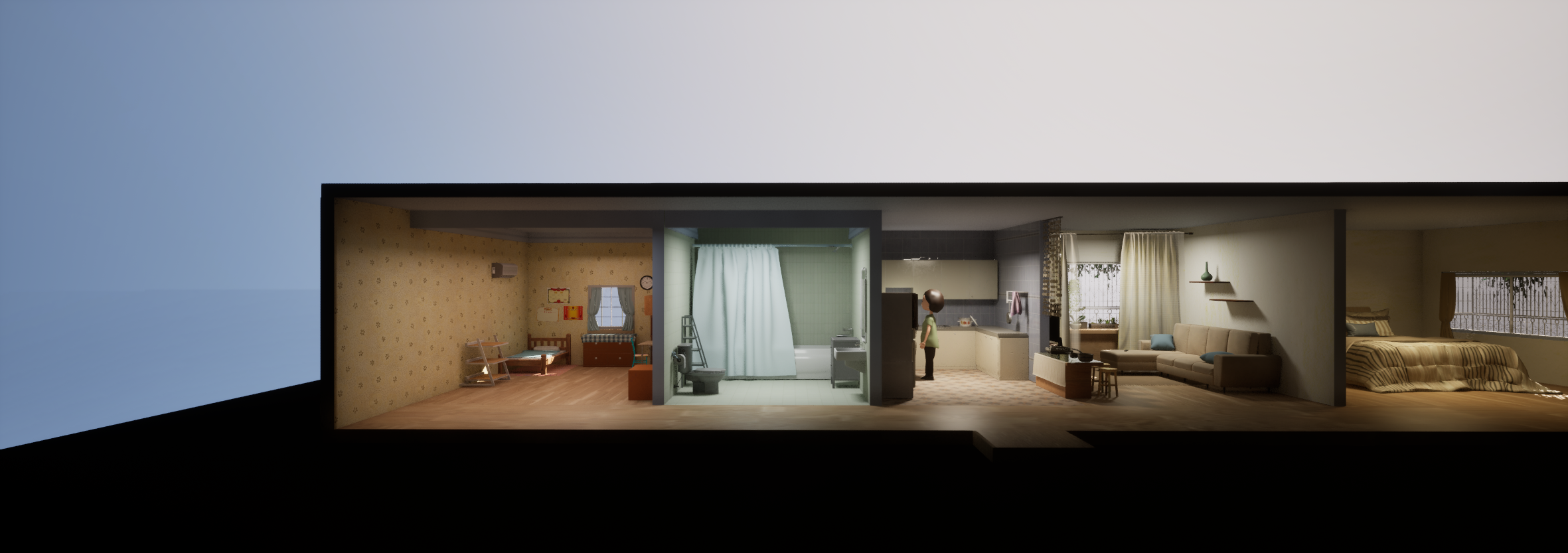
These scenes and systems document the game in development. The heart of it is a question I keep returning to: how do we make room for each other?